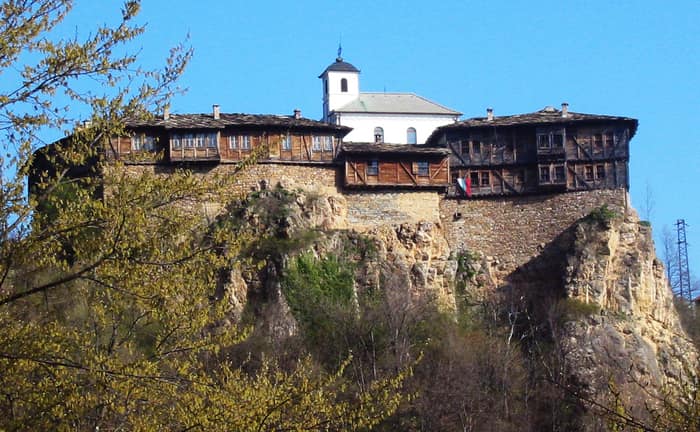
Glozhene Monastery, the Rock-Top Monastery above Teteven
Glozhene Monastery of St George the Victorious is an Orthodox monastery on a rocky ledge on the north-eastern slope of the Stara Planina, 12 km from the town of Teteven. Visible from afar and perched like a medieval stronghold, it blends legend, national-revival history and wide views. In the 19th century it was one of the safest bases of the revolutionary Vasil Levski.
Most Bulgarian monasteries hide in secluded valleys. Glozhene sits on an exposed rock like a fortress, and a grave with gilded silver buttons was found under its old church floor.
The history of Glozhene Monastery
The monastery of St George the Victorious clings to a rocky ledge on the north-eastern slope of the Stara Planina, below the cliffs of Kamen Lisets (1,073 m). Its origins are uncertain. A popular legend says it was founded in the 13th century, around 1223 to 1230 depending on the version, by Georgi Glozh, a prince from Kievan Rus who fled the Tatars and received land from Tsar Ivan Asen II. According to the tale, he started building in the valley, but the icon of St George he had carried from home vanished and reappeared on the rocks above, so the monastery rose there. Scholars are sceptical: sources do not confirm the prince, and some researchers think the story was composed centuries later. A small community of hermits may nevertheless have lived here already in the 13th century.
Little is known about the first Ottoman centuries. The buildings, and even the tower, were not destroyed, probably because of the monastery's inaccessible position and lack of strategic importance. Only a few monks stayed on, living from alms. Later came a revival: donations brought land, the community grew, and the monastery became a spiritual centre for the surrounding districts of Zlatitsa, Lovech and even Pleven. It opened cell schools, including one at its dependency in Lovech, and sent three novices to study in Russia. Its abbots defended an independent Bulgarian church against Greek influence.
In the years of the national liberation struggle the monastery was one of the safest bases of Vasil Levski. Abbot Hadji Evtimiy, a close friend of Levski, used his wide contacts to help found revolutionary committees in the villages, and the first revolutionary district was created in this region. Levski's visits were kept strictly secret. A fire in 1856 or 1857 destroyed many of the cells, and the debt for rebuilding was quickly repaid thanks to voluntary donations from local people.
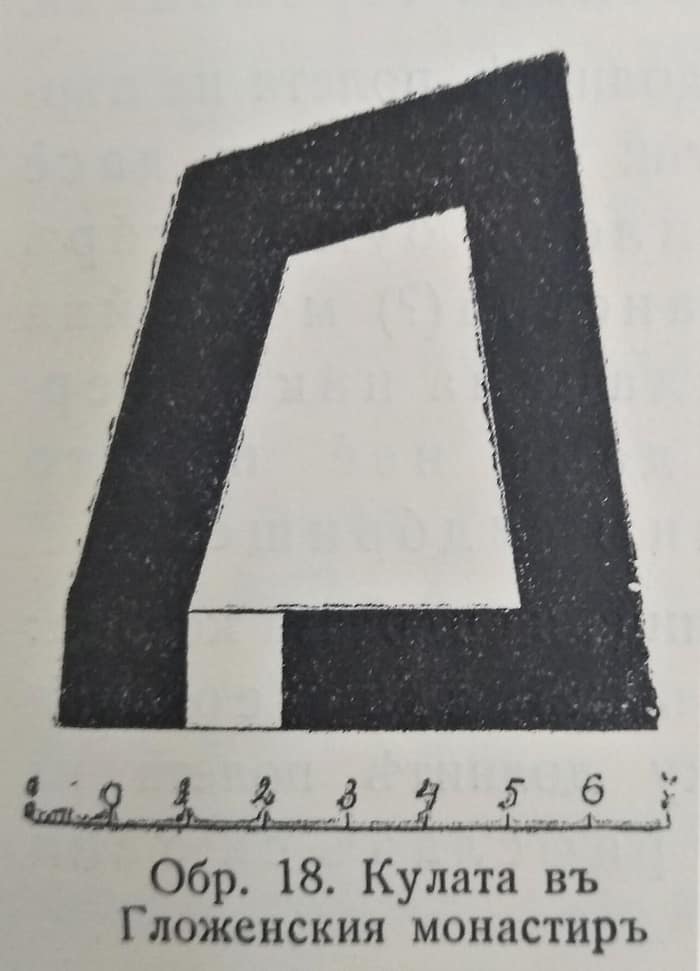
After the Liberation the monastery briefly became a place of exile. In February 1893 Metropolitan Kliment of Tarnovo, the scholar Vasil Drumev, delivered a sermon defending Orthodoxy and was banished here; a small museum about him is kept in the monastery. Earthquakes then did lasting damage. After the 1904 tremor and a stronger one in 1913, parts of the old church's walls collapsed in 1915, and its frescoes stayed exposed to the weather for fifteen years. In 1929 the old church was pulled down and a new one, built two metres further south, was consecrated in 1931. The surviving tower was also demolished to enlarge the courtyard. Under the old church floor, workers found a grave cut into the rock, with the skeleton of a very tall man in an oak coffin; the silver buttons of his coat were gilded. His identity is unknown, and he may have been the founder or another notable person.
Curious facts about Glozhene Monastery
- Unlike most Bulgarian monasteries, built in secluded spots, Glozhene stands on an exposed rock and can be seen from far away.
- The icon of St George kept here is carved from boxwood; only the head is visible, and the rest is covered by 18th-century silver, paid for by donations from the people of Teteven.
- The frescoes of the old church stayed open to the weather for fifteen years after the walls collapsed in 1915, yet reportedly grew clearer rather than fading.
- The old church measured only about 5 by 4 metres, with a vaulted ceiling and a single window on the south side.
- A grave of an unknown tall man, buried in an oak coffin with gilded silver buttons, was found under the floor of the old church.
- Glozhene Cove on Smith Island in the South Shetland Islands, Antarctica, is named after the village and the monastery.
Tours near Glozhene Monastery
Experiences in the area that you can book online with Viator:


Visiting Glozhene Monastery: what to expect
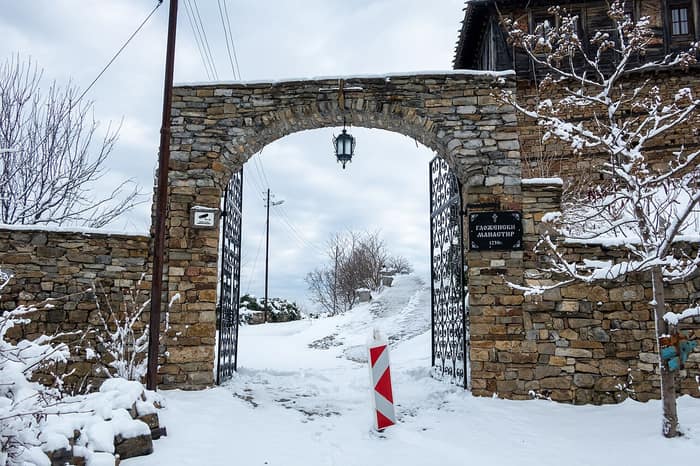
- The monastery stands about 12 km from Teteven, near the village of Glozhene. The approach to the gate was once blocked by rocks that were cut away to make a road.
- A stone stair leads up to a broad terrace with a stone balustrade around the new church, which offers fine views in every direction.
- The present church, consecrated in 1931, has a single nave about 11 metres long and a pointed bell tower; part of its iconostasis and some icons come from the old church.
- A small museum devoted to Metropolitan Kliment of Tarnovo is kept in the monastery; check the current opening hours and visiting conditions before you go.
- The monastery is a working religious site, so modest clothing and quiet behaviour are appropriate.
Opening hours, access and conditions can change. Check before you go.
Map: where Glozhene Monastery is
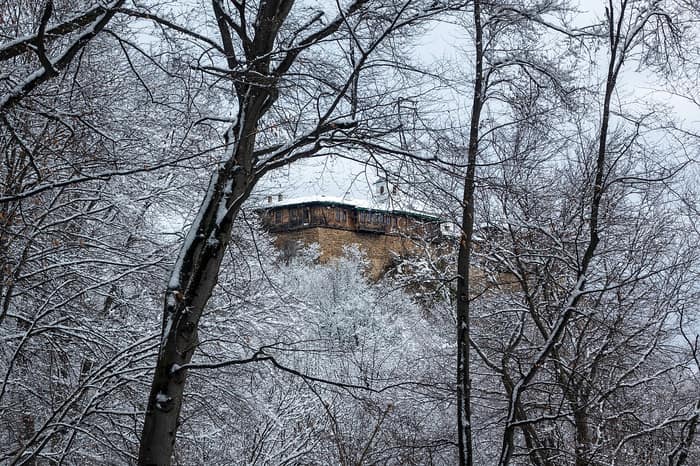
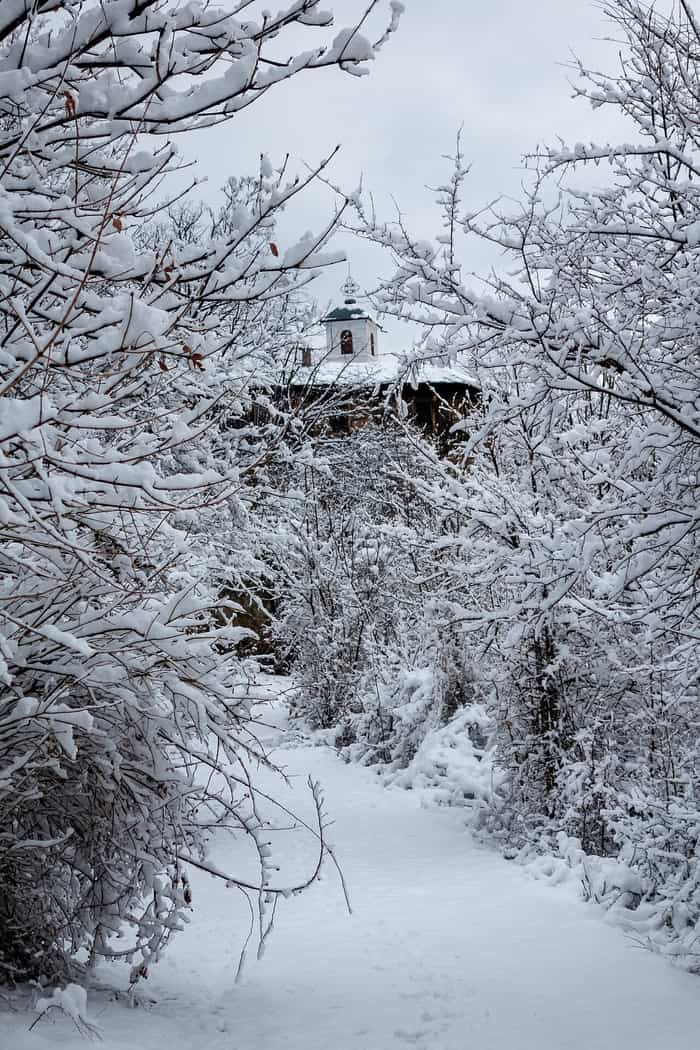
Photos of Glozhene Monastery

Questions
What is Glozhene Monastery?
Glozhene Monastery of St George the Victorious is an Orthodox monastery on a rocky ledge in the Stara Planina, near the village of Glozhene and 12 km from Teteven.
Where is Glozhene Monastery and how far is it from Teteven?
It lies about 12 km from the town of Teteven in the Lovech region, on the north-eastern slope below Kamen Lisets.
Who founded Glozhene Monastery?
A legend credits Georgi Glozh, a prince from Kievan Rus, in the 13th century. Scholars doubt the story, and the real origin is uncertain.
What is the link between Glozhene Monastery and Vasil Levski?
In the 1860s and 1870s the monastery was one of the safest bases of Levski, and Abbot Hadji Evtimiy helped to found revolutionary committees in the nearby villages.
Is the old church still standing?
No. The old church was damaged by earthquakes in the early 20th century and pulled down in 1929. The present church was consecrated in 1931.
What else is worth seeing near Glozhene Monastery?
Within roughly 30 to 50 km are Bozhenishki Urvich, the Hristo Botev Monument, Vrachesh Monastery and Troyan Monastery.
Also nearby
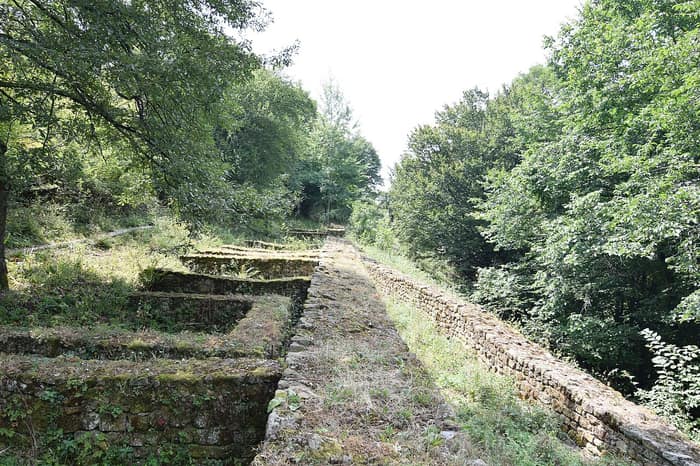
Bozhenishki Urvich
Botevgrad · mountain fortress and a medieval stone inscription
28 km away
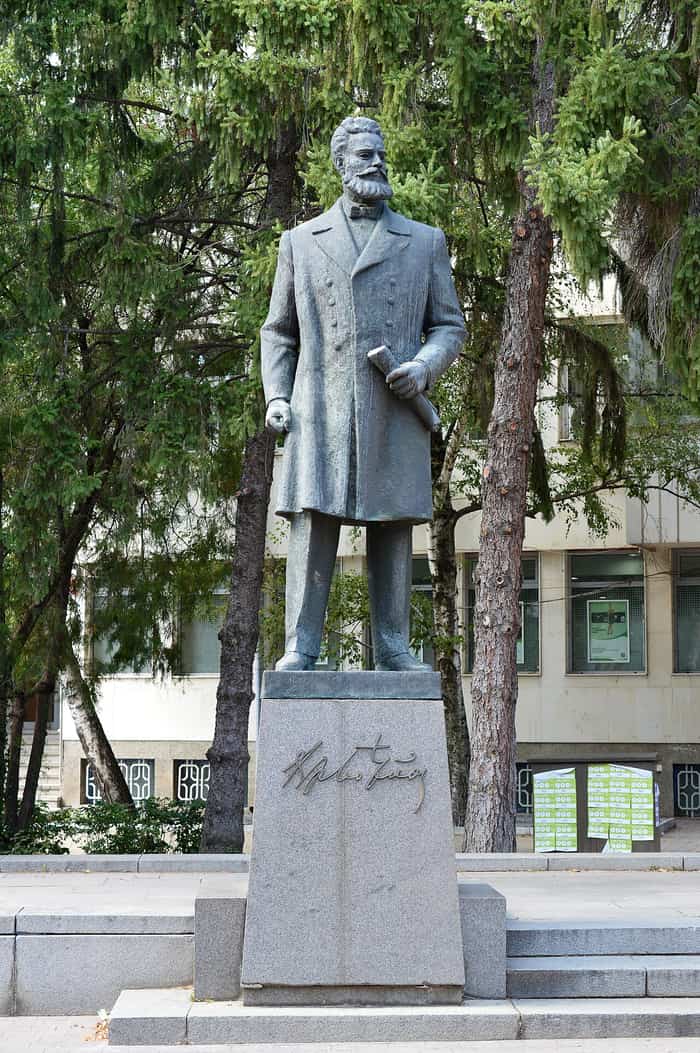
Hristo Botev Monument
Botevgrad · 1966 bronze statue of the poet-revolutionary
32 km away
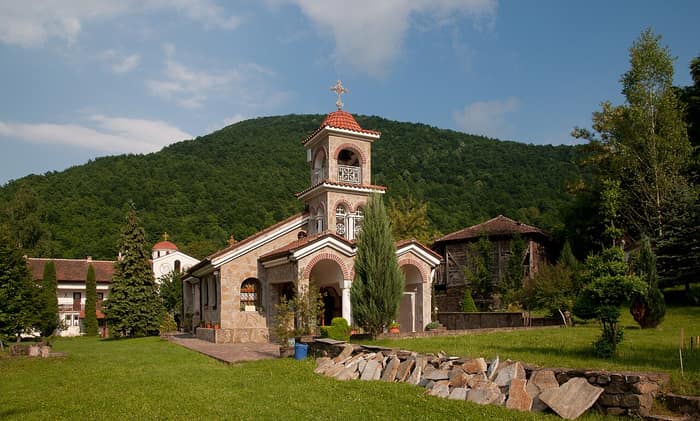
Vrachesh Monastery
Botevgrad · active monastery born from a medieval victory
40 km away
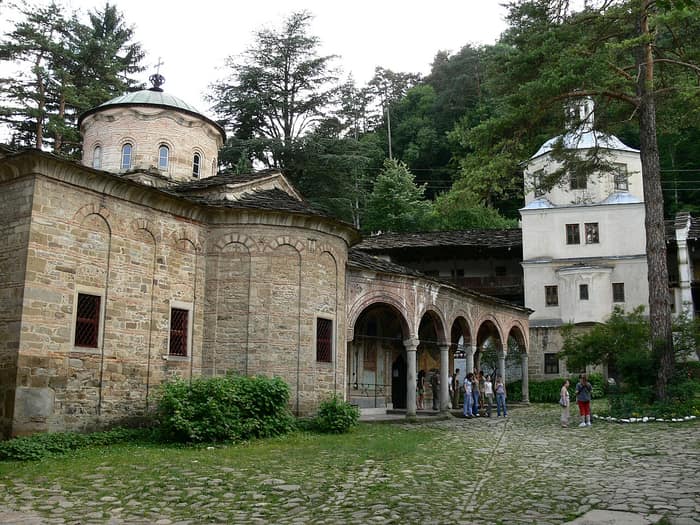
Troyan Monastery
Oreshak · Zograf frescoes and the Three-Handed Virgin
51 km away