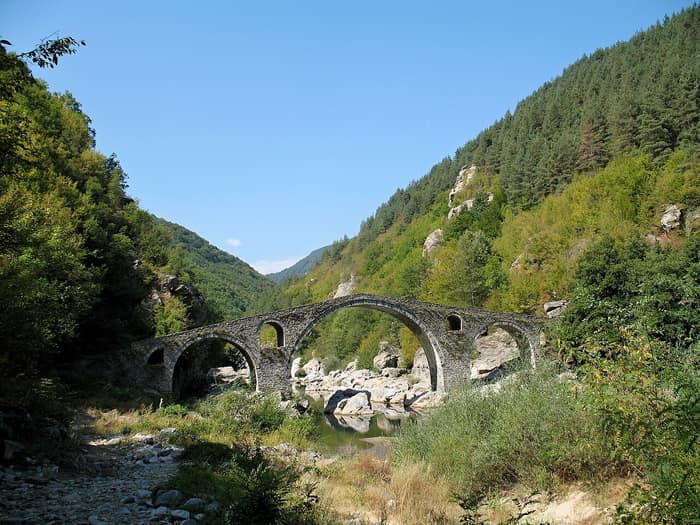
Dyavolski Most, the Devil's Bridge over the Arda near Ardino
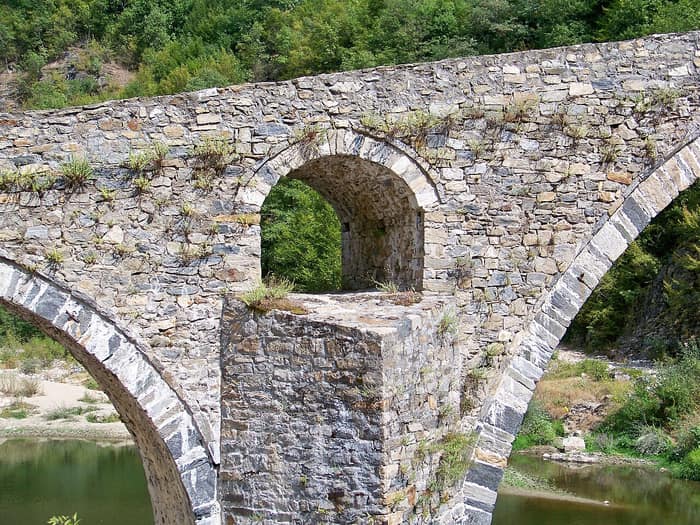
Dyavolski most, the Devil's Bridge, is a three-arched stone bridge over the Arda River in a narrow gorge in the Rhodope Mountains, about 10 km from the town of Ardino. It is the largest and best-known bridge of its kind in the Rhodopes, rebuilt in the early sixteenth century on an ancient road to the Aegean. Add the legends and the wild scenery, and it is an easy, atmospheric detour.
Legend says the master builder Dimitar was promised a secret that would make his bridge last for ever, if he finished it in 40 days. If he failed, the Devil would take his soul.
The history of the Devil's Bridge
The bridge stands at about 420 metres above sea level in a gorge whose slopes climb to around 800 metres on both sides. The place was a natural crossing for an ancient road that linked the lowlands of Thrace with the north Aegean coast. According to Bulgarian Wikipedia, a Roman bridge once spanned the river here as part of an ancient route connecting the Aegean, which Bulgarians call the White Sea, with northern Thrace over the Makaza pass. A popular legend also credits the Romans with building the present bridge.
The bridge that survives today was rebuilt between 1515 and 1518 by a Bulgarian master builder named Dimitar. Bulgarian Wikipedia adds that the work was ordered by Sultan Selim I, who wanted the trade ties between the two geographic regions to continue. German Wikipedia says the Ottoman bridge may stand in place of a predecessor from Roman times. In Ottoman Turkish the bridge was known as Şeytan Köprüsü, and in the local form Shaytan kyupriya, both meaning Devil's Bridge.
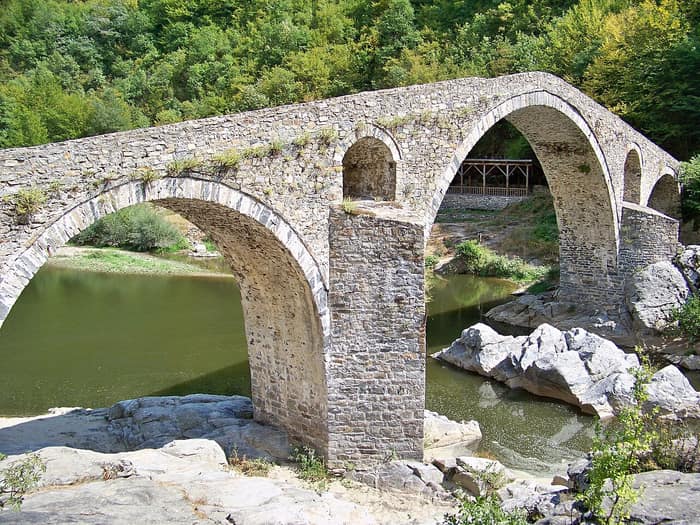
Its measurements are impressive for a mountain crossing. The bridge is 56 metres long and 3.5 metres wide, with three arches; the central arch rises 11.5 metres, though Bulgarian sources give a range of 11 to 12. Small holes with semicircular arches pierce the ribs of the vaults, which let flood water pass and, according to English Wikipedia, can also be used to read the water level. A stone parapet only 12 centimetres high survives along the edges, and breakwaters face the current.
Almost nothing is actually known about the construction, and for centuries the bridge has been wrapped in legend. Tradition names its builder as Master Dimitar from the nearby village of Nedelino, who accepted the challenge of bridging a wild river after everyone before him had failed. The Devil is said to have promised him a secret that would make his creation eternal, if he finished within 40 days; if he failed, the Devil would claim his soul. Dimitar completed the task, the Devil kept his word, and the master died soon afterwards, taking the secret to the grave.
Local belief adds more. It is said you can see the face of Satan in the water of the Arda between eleven and noon, when the bridge and its reflection form a circle, and that one of the stones carries the print of the Devil's footstep. The bridge was proclaimed a monument of culture on 24 February 1984. Picnic facilities were built close by, and after restoration work in 2013 the road from Ardino to the bridge was asphalted, with a 5 km asphalt approach mentioned by German Wikipedia. The international Sultans Trail hiking route passes the bridge on its way from Ardino to Kardzhali.
Curious facts about the Devil's Bridge
- Legend says you can see the face of Satan in the Arda between eleven and noon, when the bridge and its reflection make a circle.
- One of the stones is said to bear the print of the Devil's footstep.
- The bridge is 56 metres long yet only 3.5 metres wide, with a stone parapet just 12 centimetres high.
- Small semicircular arches in the ribs of the vaults let water pass and, according to English Wikipedia, can serve as a gauge of the water level.
- Its Turkish name, Şeytan Köprüsü, also means Devil's Bridge; Bulgarian Wikipedia records the local form Shaytan kyupriya.
- The international Sultans Trail long-distance hiking route crosses the bridge between Ardino and Kardzhali.
Tours near Dyavolski Most (Devil's Bridge)
Experiences in the area that you can book online with Viator:


Visiting the Devil's Bridge: what to expect
- The bridge lies about 10 km north-west of Ardino; since the 2013 restoration the road is asphalted.
- Picnic facilities have been built near the bridge, making it a pleasant stop for a short break.
- Walk across and look down into the gorge, and try the legend: see whether the bridge and its reflection form a circle around midday.
- The Sultans Trail passes the bridge on the stretch from Ardino to Kardzhali, so it also suits hikers.
- Ustra Fortress is about 19 km away, Vishegrad Fortress about 24 km, Belintash about 28 km and Perperikon about 31 km.
Opening hours, access and conditions can change. Check before you go.
Map: where Dyavolski Most (Devil's Bridge) is
Photos of Dyavolski Most (Devil's Bridge)

Questions
What is Dyavolski most, the Devil's Bridge?
It is a three-arched Ottoman-era stone bridge over the Arda River in a narrow gorge in the Rhodopes, near Ardino. It is the largest and best-known bridge of its kind in the Rhodopes.
Where is the Devil's Bridge and how far is it from Ardino?
It stands about 10 km north-west of Ardino in southern Bulgaria, near the villages of Dyadovtsi and Latinka. The road is asphalted since the 2013 restoration.
Who built the Devil's Bridge?
It was rebuilt between 1515 and 1518 by a Bulgarian master builder named Dimitar, reportedly on the order of Sultan Selim I. A Roman bridge may have stood here before.
What is the legend of the Devil's Bridge?
Master Dimitar was promised a secret that would make his bridge last for ever if he built it in 40 days, or the Devil would take his soul. He succeeded but died soon after, taking the secret to his grave.
How big is the Devil's Bridge?
It is 56 metres long and 3.5 metres wide, with three arches. The central arch is about 11.5 metres high.
What else is worth seeing near the Devil's Bridge?
Ustra Fortress is about 19 km away, Vishegrad Fortress about 24 km and Perperikon about 31 km. The Sultans Trail hiking route passes the bridge.
Also nearby
Ustra Fortress
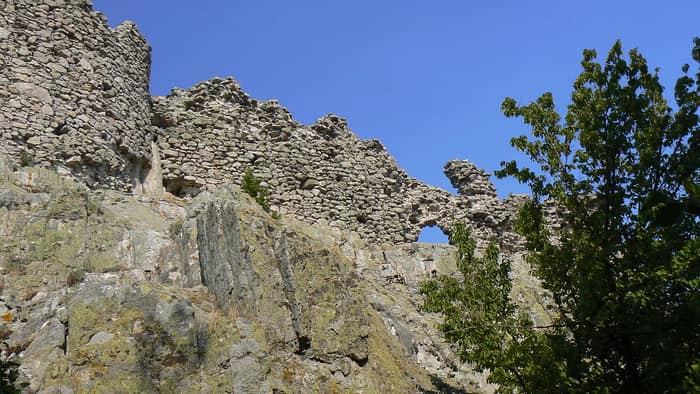
Ustren · high, well-preserved Rhodope fortress with towers
19 km away
Vishegrad Fortress
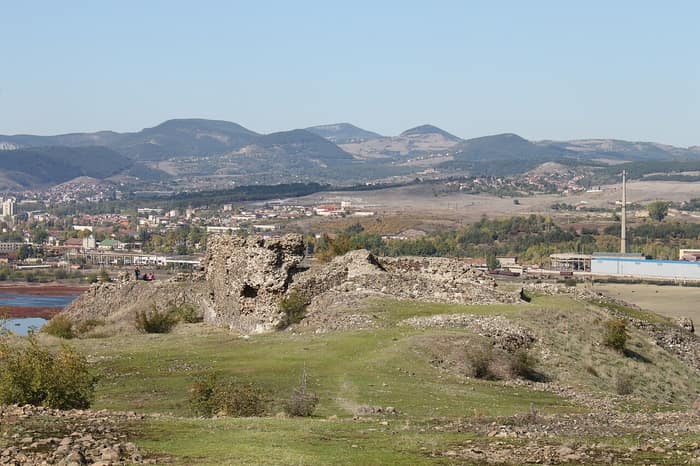
Kardzhali · medieval fortress with a Thracian fort next door
24 km away
Belintash
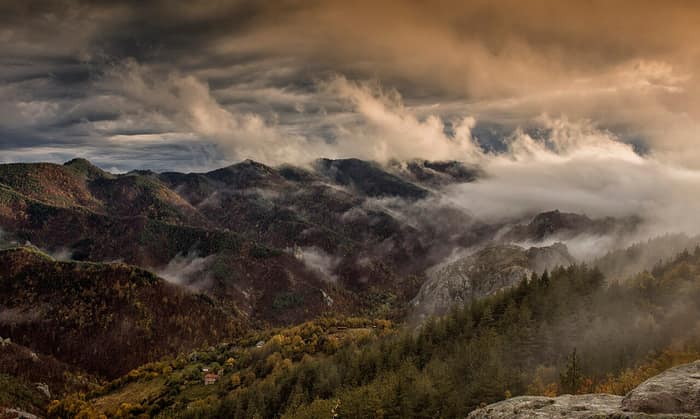
Asenovgrad · carved rock sanctuary with unsolved riddles
28 km away
Perperikon
Kardzhali · rock-cut Thracian city and Balkan megalith giant
31 km away