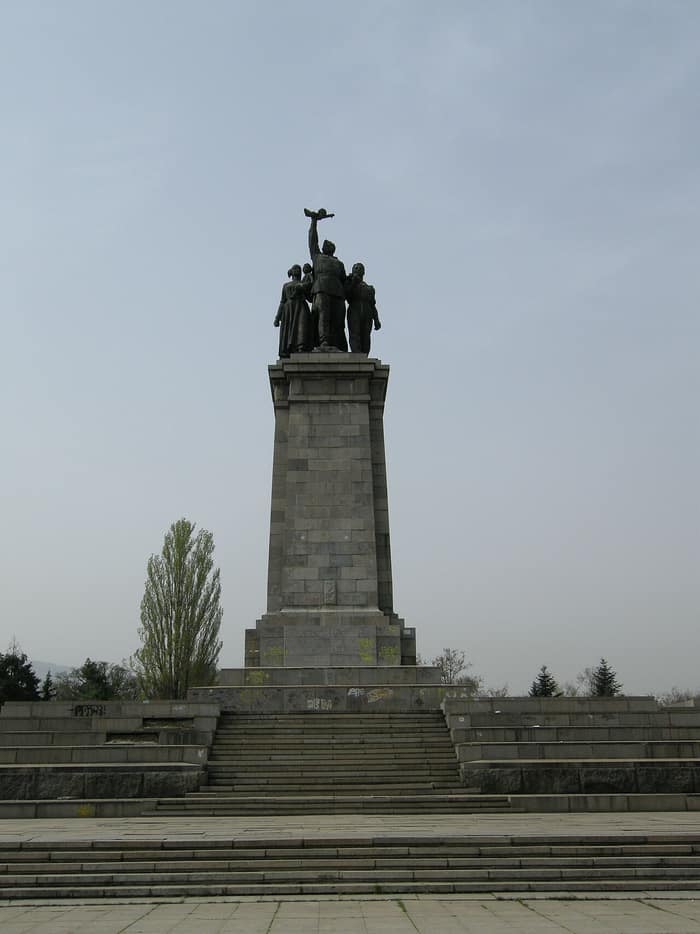
The Monument to the Soviet Army in Sofia and Its Story
The Monument to the Soviet Army stands in a park in central Sofia, on Tsar Osvoboditel Boulevard near Orlov Most and Sofia University. Built in 1952–1954 in the socialist-realist style, it has long been one of the city's most debated landmarks, a canvas for protest art and, since December 2023, a partly dismantled and fenced-off site.
In June 2011 anonymous artists overnight turned its soldiers into Superman, Joker and Santa Claus. Since December 2023 the monument has been partly dismantled and fenced off.
The history of the Monument to the Soviet Army
The idea took shape soon after the Second World War. On 17 January 1947 Georgi Dimitrov, newly elected prime minister, submitted a report proposing a majestic monument to the Red Army in the capital, and on 4 October 1949 the Council of Ministers decided to produce it. The first sod was turned on 5 July 1952, and the monument was finished in 1954. It was opened on 7 September 1954 in the presence of the Soviet marshal Sergei Biryuzov, ten years after Soviet troops entered Bulgaria in September 1944.
The wartime background is complex. Bulgaria had been an ally of the Third Reich, but as Soviet forces approached its borders it declared neutrality on 26 August 1944 and ordered German troops to leave. On 5 September the Soviet Union declared war on Bulgaria, on 8 September Bulgaria declared war on Germany, and on 9 September Soviet troops entered the country without real fighting. The panel on the front of the monument still reads, in Bulgarian, “To the Soviet Army liberator, from the grateful Bulgarian people”.
The memorial was created by a team led by the sculptor Ivan Funev, with the architects Danko Mitov, Ivan Vasilyov, Lyuben Neykov and Boris Kapitanov. It is a 37-metre truncated pyramid crowned by an 8-metre sculptural group of a Soviet soldier, a Bulgarian worker and a mother with a child. Three large reliefs show the October Revolution of 1917 on the east side, the Soviet home front on the south and the Great Patriotic War on the west.
After 1989 the monument became the subject of heated debate. Defenders see it as respect for the Red Army's contribution to the Allied victory over Nazi Germany and note that similar monuments exist elsewhere in Europe. Critics stress the Soviet role in the imposition of communist rule and object to a foreign army's monument standing higher and more centrally than national symbols. In 1993 the Sofia Municipal Council considered removing it, but public support was lacking.
From 2011 the monument was repeatedly painted by protesters, from pop-art superheroes to the colours of Ukraine in 2014 and again in 2022. In August 2023 a decision was taken to move it to the Museum of Socialist Art, later cancelled because the sculptures would have taken up too much space there. On 12 December 2023 the dismantling of some of the figures began, and the figures on top of the main structure were removed by 19 December. Since then the monument has been fenced off.
Curious facts about the Monument to the Soviet Army
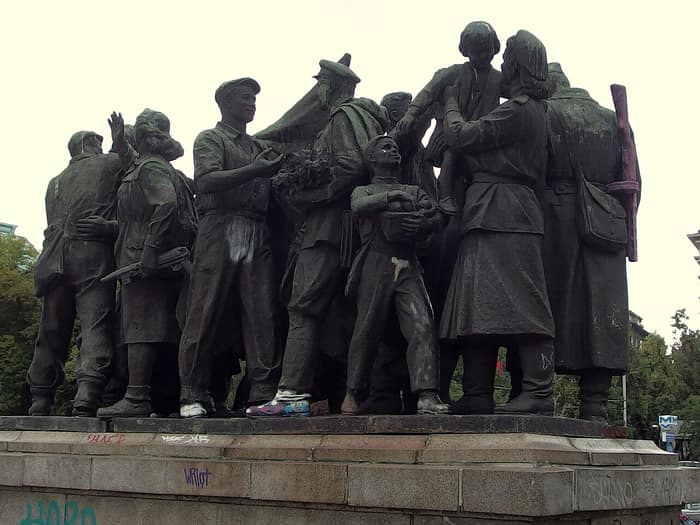
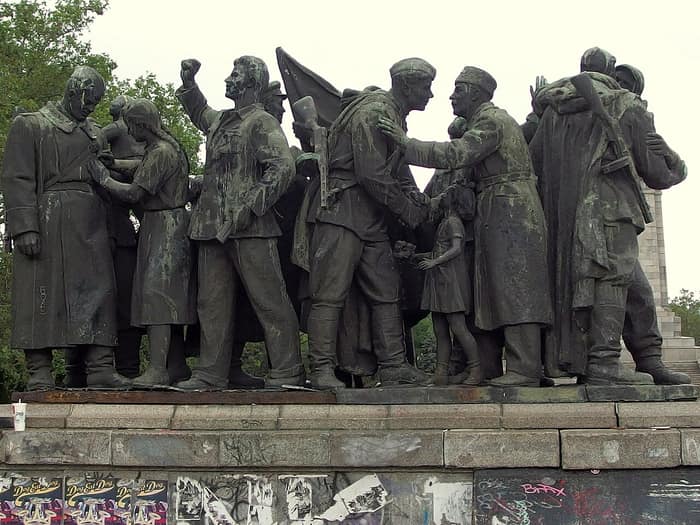
- On 17 June 2011 a group of anonymous artists called Destructive Creation repainted the soldiers overnight as Superman, Joker, Robin, Captain America, Ronald McDonald, Santa Claus and other pop-culture figures, under the caption “In Step with the Time”. The paint was gone three days later.
- The 2011 action was compared to Banksy and made international news; a short documentary about it, In Step with the Time by Anton Partalev, won second prize at the 2013 In Out Festival in Poland.
- In February 2012 the soldiers were given Guy Fawkes masks as an invitation to the anti-ACTA protests held the following day.
- On 21 August 2013 the monument was painted pink with the words “Bulgaria apologizes” in Bulgarian and Czech, a reference to the 1968 Prague Spring and to David Černý's 1991 pink paint on a Soviet tank memorial in Prague.
- The sculptor Lyubomir Dalchev, who took part in creating the relief work, wrote a letter in 1993 saying the monument should not tower over the capital's centre but be removed.
- A survey of 1,003 Sofia residents in autumn 2023 found 30.7% wanting the monument to stay, 27.8% in favour of moving it to a museum and 22% wanting it demolished.
Tours near Monument to the Soviet Army
Experiences in the area that you can book online with Viator:

Half Day Tour around Sofia and the mountains with Thermal Spa
See details ›
ATV Off Road Tour Near Sofia Guided Quad Bike Experience
See details ›
Plovdiv, Asen's Fortress and Bachkovo Monastery small group tour with pickup
See details ›
Full-day Rila Monastery, Stob Pyramids and St Ivan Rilski Cave from Sofia
See details ›Visiting the Monument to the Soviet Army in Sofia
- The monument stands in a large park beside Tsar Osvoboditel Boulevard, near Orlov Most and Sofia University; the park is a popular meeting place for young people.
- Since December 2023 the monument has been partly dismantled and fenced off, so it is wise to check what can currently be seen before you go.
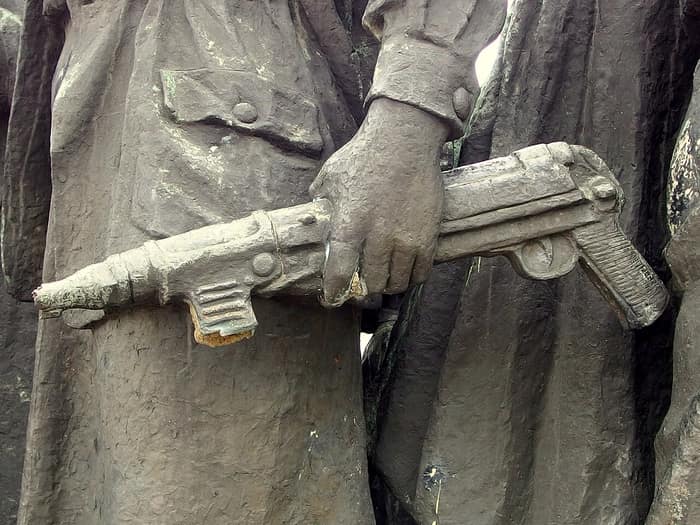
- The surrounding complex has secondary sculptural groups, including a group of soldiers that has often served as a canvas for political artists.
- It sits within walking distance of other sights in the centre: the Monument to the Tsar Liberator, the Battenberg Mausoleum, Eagles' Bridge and, about 1 km away, the Amphitheatre of Serdica.
Opening hours, access and conditions can change. Check before you go.
Map: where Monument to the Soviet Army is
Photos of Monument to the Soviet Army
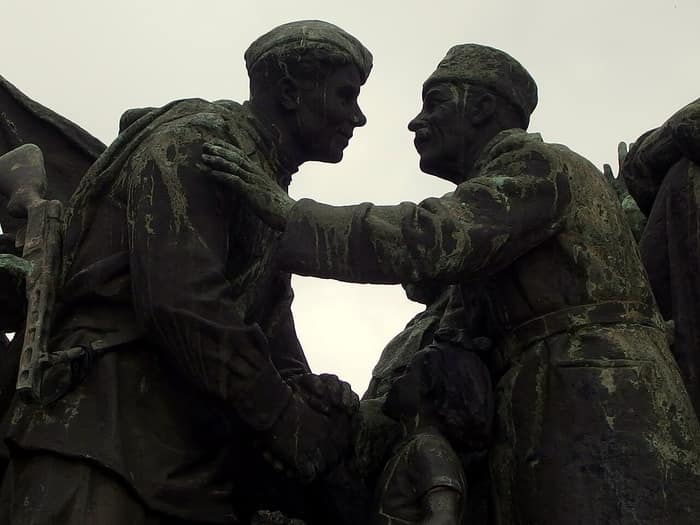
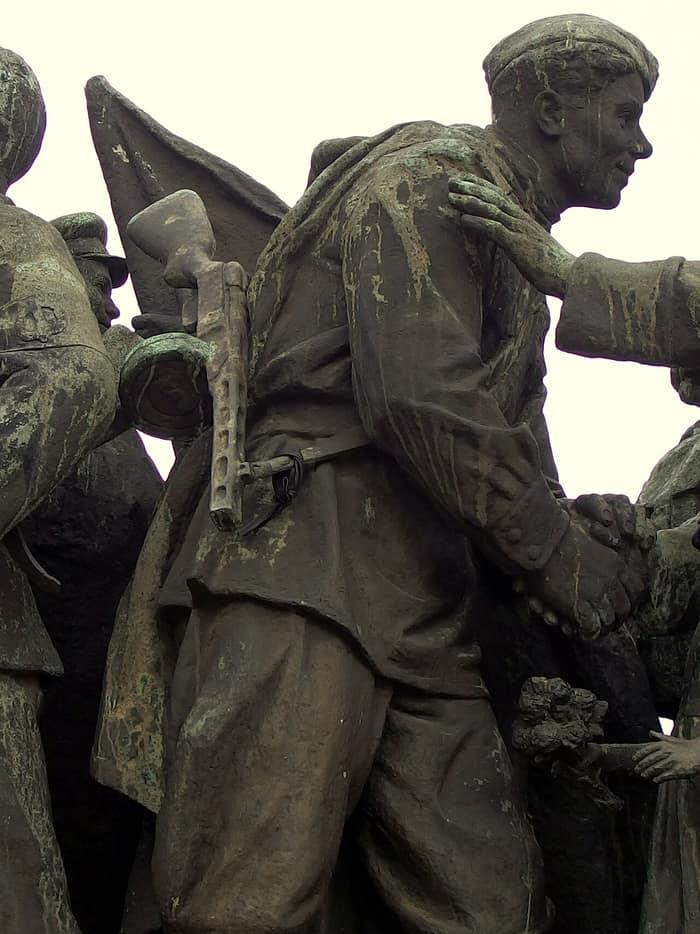
Questions
What is the Monument to the Soviet Army in Sofia?
It is a socialist-realist memorial complex in a park in central Sofia, built between 1952 and 1954 to mark ten years since Soviet troops entered Bulgaria. A 37-metre pyramid carried a sculptural group of a soldier, a worker and a mother with a child.
Is the Monument to the Soviet Army still standing?
It has been partly dismantled. Work began on 12 December 2023, the figures on top of the main structure were removed by 19 December, and the site has been fenced off since then.
Why is the monument controversial?
Some see it as a tribute to the Red Army's part in defeating Nazi Germany, others as a symbol of the Soviet role in imposing communist rule. The debate has run since 1989, and the monument has been painted many times by protesters.
Who built the Monument to the Soviet Army?
A team led by the sculptor Ivan Funev, with the architects Danko Mitov, Ivan Vasilyov, Lyuben Neykov and Boris Kapitanov, and several other sculptors. It was opened on 7 September 1954.
Where is the Monument to the Soviet Army in Sofia?
It is in central Sofia, on Tsar Osvoboditel Boulevard near Orlov Most and Sofia University, in a park that is popular with young people.
What can be seen near the Monument to the Soviet Army?
Several sights lie within walking distance: the Monument to the Tsar Liberator, the Battenberg Mausoleum, Eagles' Bridge and the Amphitheatre of Serdica, about 1 km away.
Also nearby
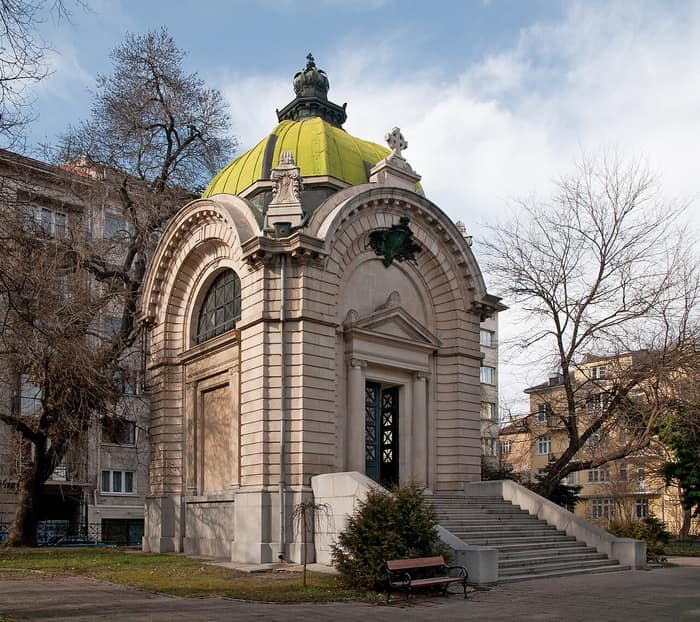
Battenberg Mausoleum
Sofia · neo-baroque tomb of Bulgaria's first prince
200 m away
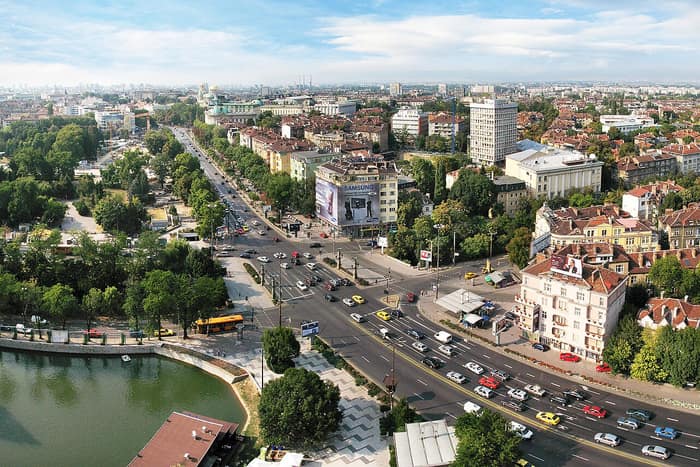
Eagles' Bridge
Sofia · 1891 stone bridge guarded by four bronze eagles
250 m away
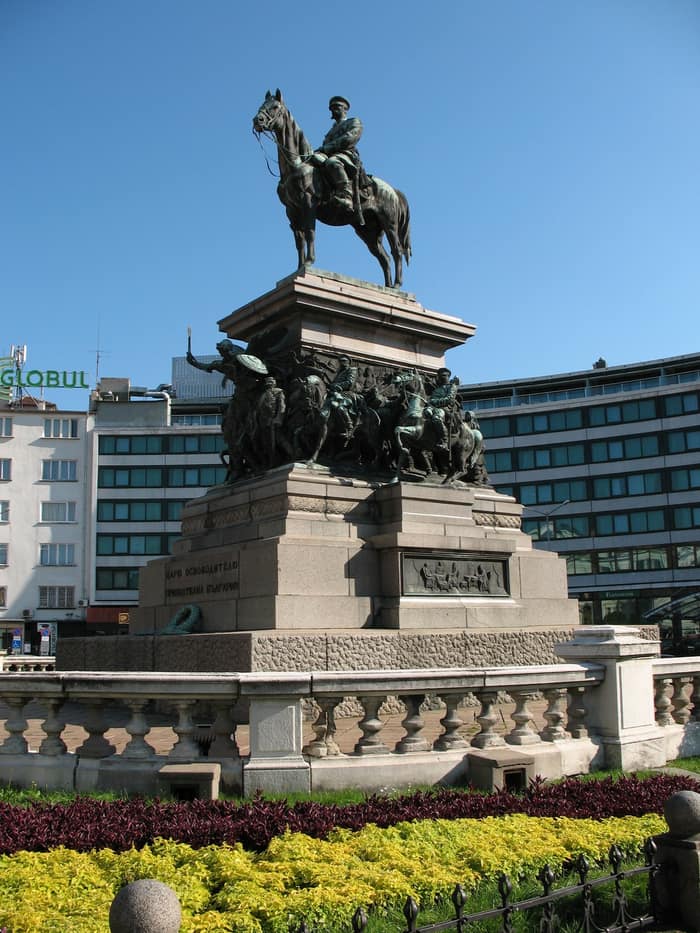
Monument to the Tsar Liberator
Sofia · bronze tsar on a black granite plinth, 1907
350 m away
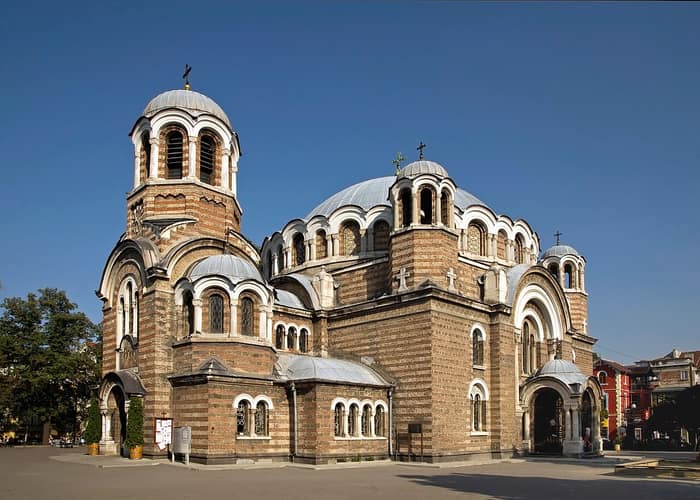
Seven Saints Church
Sofia · a mosque turned church, built over a Roman shrine
550 m away