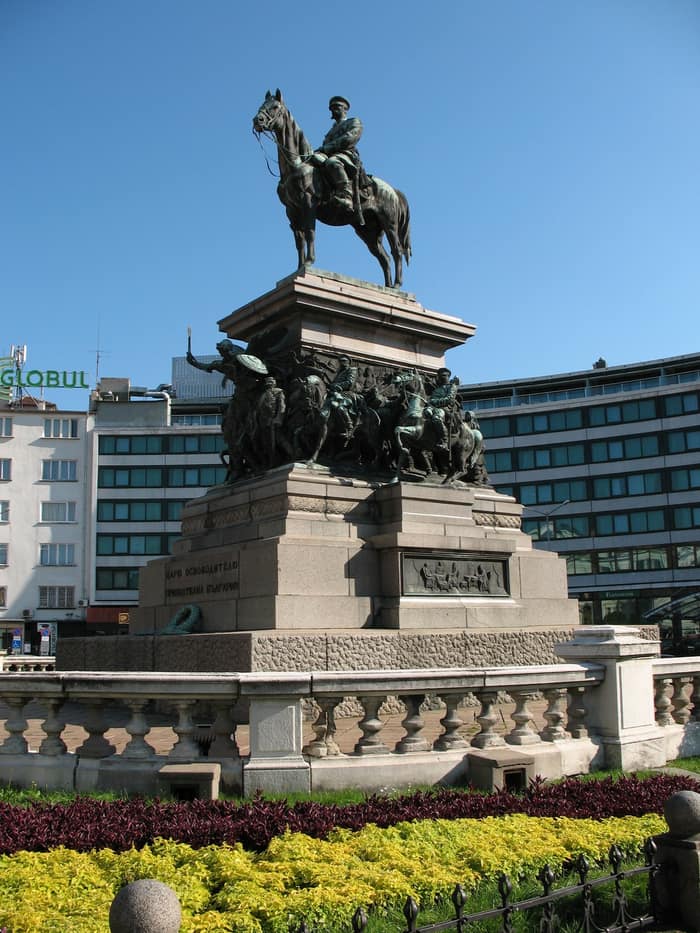
The Monument to the Tsar Liberator in Sofia, Opposite Parliament
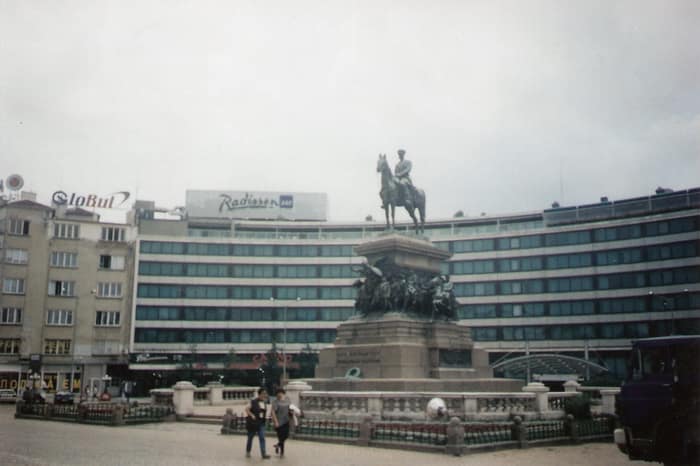
The Monument to the Tsar Liberator is an equestrian monument in the centre of Sofia, facing the National Assembly on Tsar Osvoboditel Boulevard. It honours Alexander II of Russia, whose war of 1877–78 led to the Liberation of Bulgaria. Italian sculptor Arnoldo Zocchi created this neoclassical landmark, with bronze reliefs on black polished granite.
Ninety sculptors signed up for the competition, thirty-two sent designs, and a Florentine won. The result stands 12 metres tall in front of Bulgaria's parliament, funded partly by a postage stamp.
The history of the Monument to the Tsar Liberator
The monument honours Alexander II of Russia, who freed the serfs in Russia and won the Russo-Turkish War of 1877–78. The idea of a monument to the liberators was first put forward in December 1892 at the Second Congress of the corps of April Uprising fighters and volunteers. A committee was founded to raise the funds for the monument and for a home for veterans. Stoyan Zaimov chaired it, with Prince Ferdinand as honorary chairman, who made the first donation of 50,000 leva. The deputies of the Tenth Ordinary National Assembly added 300,000 leva, and the rest came from public organisations and from the mass purchase of a special postage stamp bearing the image of Alexander II.
In February 1900 the committee drew up the competition programme, fixing the required elements, the materials and the sum for execution. Conditions went to art academies around the world, and 90 sculptors enrolled; 32 sent designs from 13 countries, nine of them from Paris. The models were shown to the public in the royal riding hall in September 1900, and on 20 September Ferdinand opened the jury's session. The competition was won by the Florentine sculptor Arnoldo Zocchi, ahead of the German Gerhard Eberlein, the Frenchmen Antonin Laroux and Gaston Malet and the Czech František Rous. The Bulgarian architect Nikola Lazarov took part in the architectural design, and engineer Hristo Stanishev handled the technical execution.
The foundation stone was laid on 23 April 1901, St George's Day, in the presence of Prince Ferdinand I. Work was completed on 15 September 1903, but the official opening only took place on 30 August 1907. Ferdinand attended with his sons Boris and Kiril, together with Grand Duke Vladimir Alexandrovich, son of Alexander II, his wife Maria Pavlovna and their son Andrei, as well as war veterans and the sculptor himself.
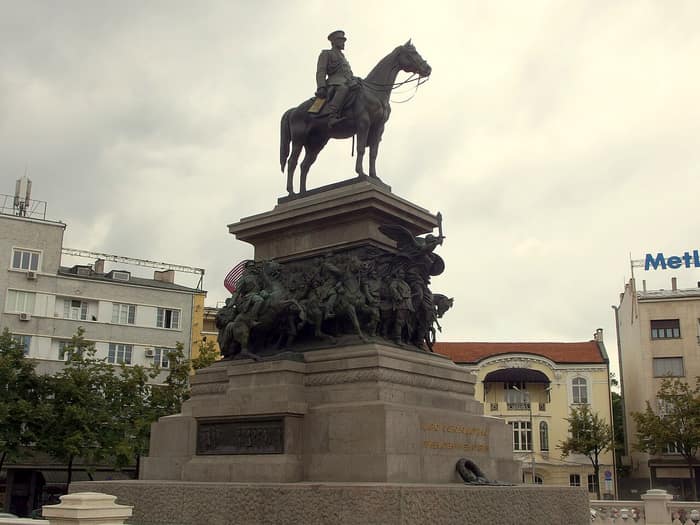
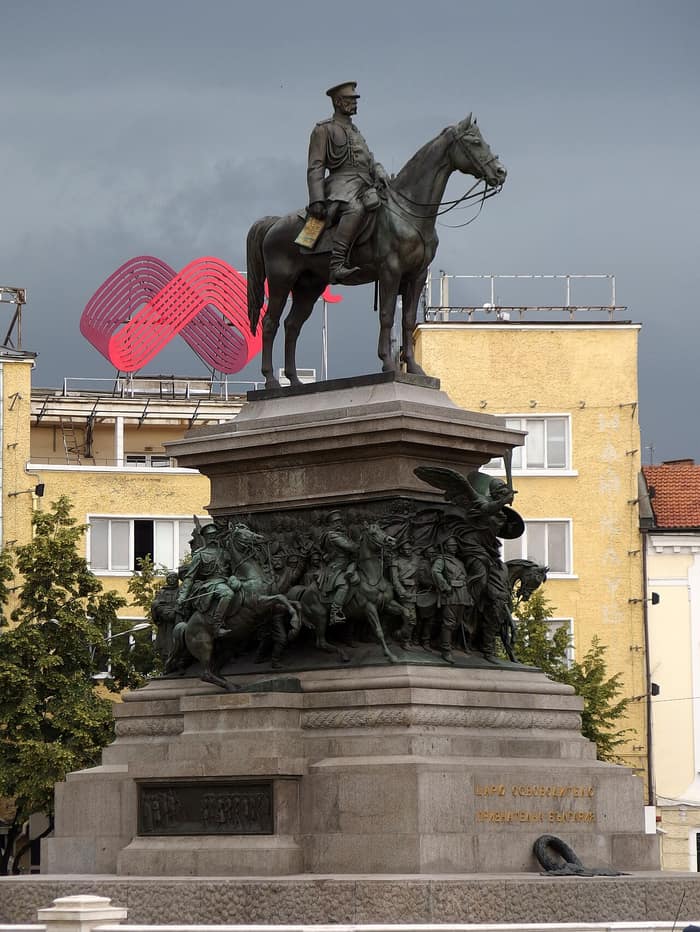
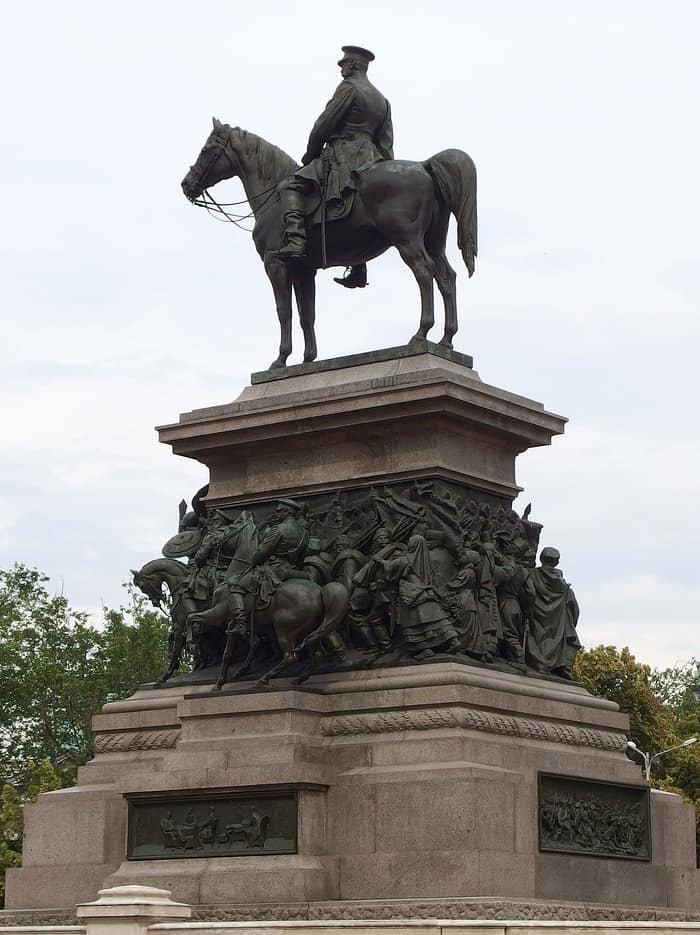
The monument is built of black polished granite from Vitosha. It consists of a pedestal, a middle part with figures and a massive Neo-Renaissance cornice, topped by a 4.5-metre bronze statue of the tsar on horseback; the whole stands 12 metres tall. A main bronze relief runs around the middle part, showing soldiers led into battle by the goddess of victory, Nike, with portraits of more than 30 commanders, statesmen and public figures. Three smaller reliefs show the Battle of Stara Zagora, the signing of the Treaty of San Stefano and the convening of the Constituent Assembly in Veliko Tarnovo.
At the front, a bronze laurel wreath was donated by Romania in memory of its fallen soldiers, and the inscription reads, in Bulgarian, “To the Tsar Liberator, from a grateful Bulgaria”. The monument was thoroughly renovated in 2013.
Curious facts about the Monument to the Tsar Liberator
- The competition drew 90 sculptors; 32 sent designs from 13 countries, including nine from Paris, three from Florence and three from Sofia.
- Part of the money came from the mass buying of a special postage stamp with the portrait of Alexander II, issued for the purpose.
- The reliefs include portraits of General Mikhail Skobelev, General Joseph Gourko, Count Ignatiev and writers such as Ivan Vazov and Petko Slaveykov, among others.
- The bronze wreath at the foot, a gift from Romania, commemorates the Romanian soldiers who died in the war; Bulgarian Wikipedia names King Carol I as the donor.
- Arnoldo Zocchi also designed the Monument of Liberty in Ruse, where the local committee deliberately dropped the tsar figure so it would not resemble this one.
- It is also called the Monument to the Liberators, and it was built on the idea of the veterans' congress rather than by the state alone.
Tours near Monument to the Tsar Liberator
Experiences in the area that you can book online with Viator:

Veliko Tarnovo and Fortress Tsarevets Self Guided Audio Tour
See details ›
Half Day Tour around Sofia and the mountains with Thermal Spa
See details ›
ATV Off Road Tour Near Sofia Guided Quad Bike Experience
See details ›
Plovdiv, Asen's Fortress and Bachkovo Monastery small group tour with pickup
See details ›Visiting the Monument to the Tsar Liberator in Sofia
- The monument stands on the square in front of the National Assembly, on Tsar Osvoboditel Boulevard in central Sofia, and can be viewed from all sides.
- Take time to read the bronze reliefs around the middle part and the inscription on the front.
- It sits among other sights within walking distance: the Monument to the Soviet Army, the Battenberg Mausoleum, the Monument to the Unknown Soldier and Saint Sophia Church.
- The monument was thoroughly restored in 2013, and a 3D laser scan was made for the restoration.
Opening hours, access and conditions can change. Check before you go.
Map: where Monument to the Tsar Liberator is
Photos of Monument to the Tsar Liberator

Questions
What is the Monument to the Tsar Liberator in Sofia?
It is an equestrian monument in central Sofia honouring Alexander II of Russia, whose war of 1877–78 led to Bulgaria's liberation. It stands facing the National Assembly on Tsar Osvoboditel Boulevard.
Who made the Monument to the Tsar Liberator?
The Florentine sculptor Arnoldo Zocchi, who won an international competition with 32 designs from 13 countries. The Bulgarian architect Nikola Lazarov took part in the architectural design.
When was the Monument to the Tsar Liberator opened?
The foundation stone was laid on 23 April 1901 and the work was finished on 15 September 1903. The official opening took place on 30 August 1907.
How tall is the Monument to the Tsar Liberator?
The whole monument is 12 metres tall, including a 4.5-metre bronze equestrian statue of Alexander II on a black polished granite base.
What do the reliefs on the monument show?
The main relief shows soldiers led by the goddess Nike; smaller ones show the Battle of Stara Zagora, the Treaty of San Stefano and the Constituent Assembly in Veliko Tarnovo.
What can be seen near the Monument to the Tsar Liberator?
Within walking distance are the Monument to the Soviet Army, the Battenberg Mausoleum, the Monument to the Unknown Soldier and Saint Sophia Church.
Also nearby
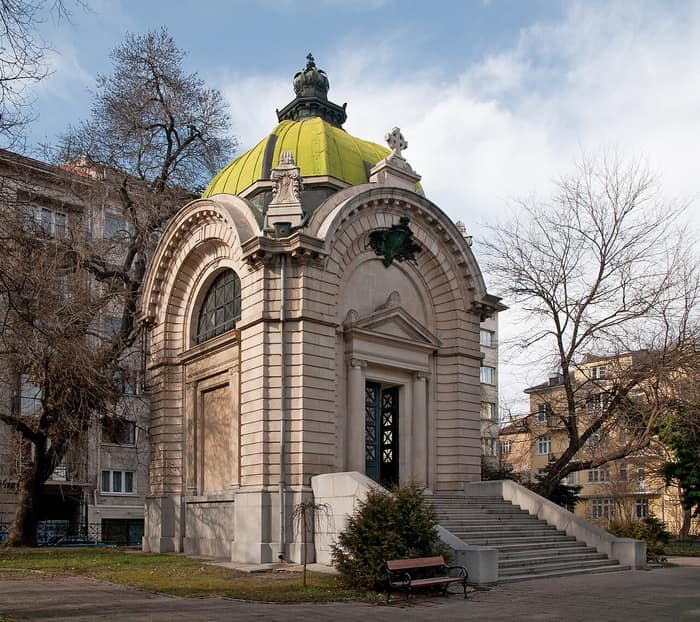
Battenberg Mausoleum
Sofia · neo-baroque tomb of Bulgaria's first prince
250 m away
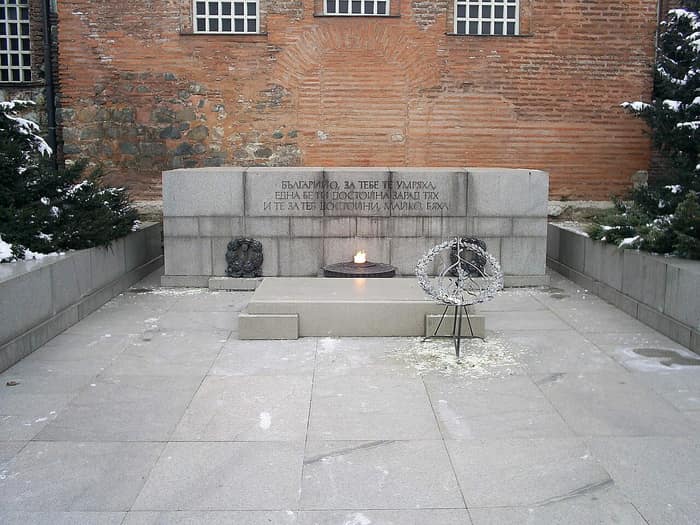
Monument to the Unknown Soldier
Sofia · eternal flame and a bronze lion that was lost for years
300 m away
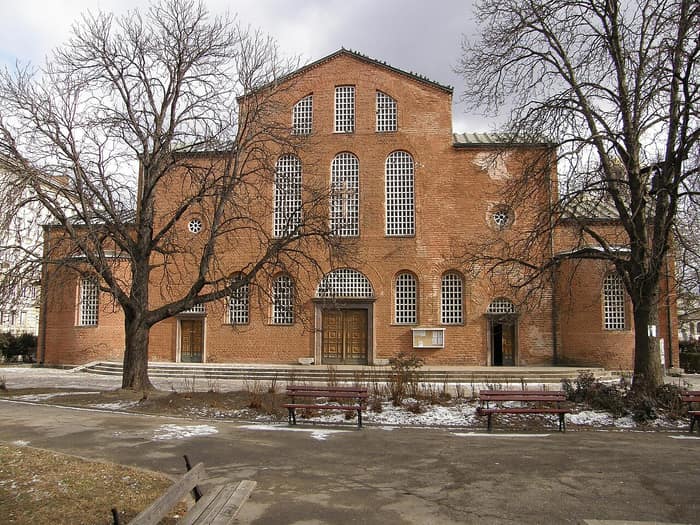
Saint Sophia Church
Sofia · early Christian basilica above a Roman necropolis
350 m away
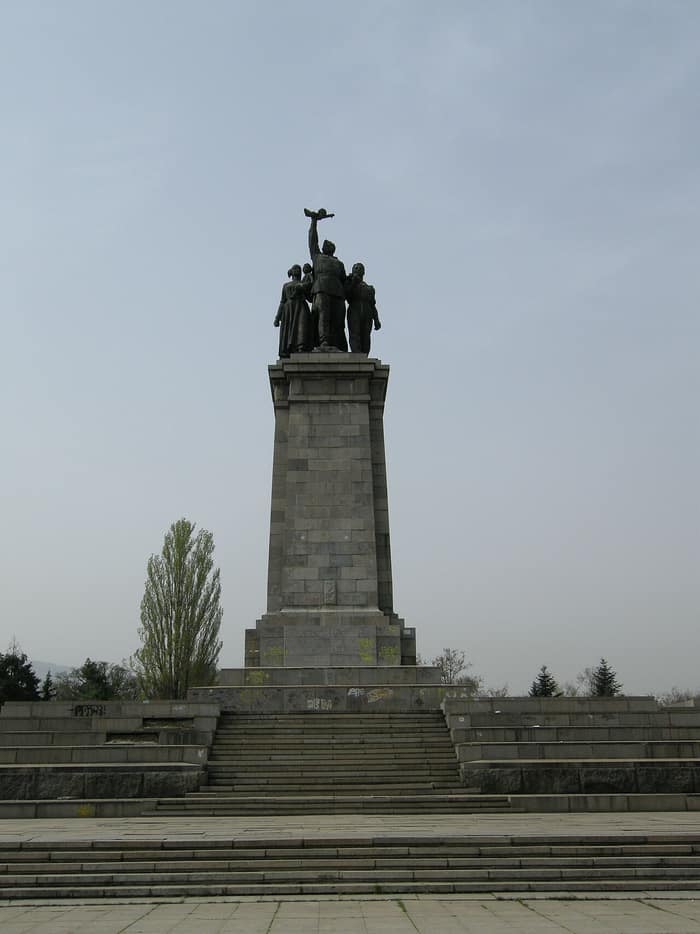
Monument to the Soviet Army
Sofia · Cold War memorial, repainted often, partly dismantled
350 m away